Every spring Australian racing tells itself the same story: the sprinters are all pointed at one race, the twelve slots are the only thing that matters, and every 1100-metre Saturday in September is an audition.
On 19 September at Randwick, an eight-year-old called Mazu walked out for The Shorts and declined to participate in any of it.
The pre-race
He would not walk to the gates. For several minutes he stood there, and when the clerk of the course’s escorts came to move him along, he lashed out at them.
There is a version of this where a horse that behaves like that runs a shocker and everyone nods and says the temperament finally caught up with him. That is the normal version.
The race
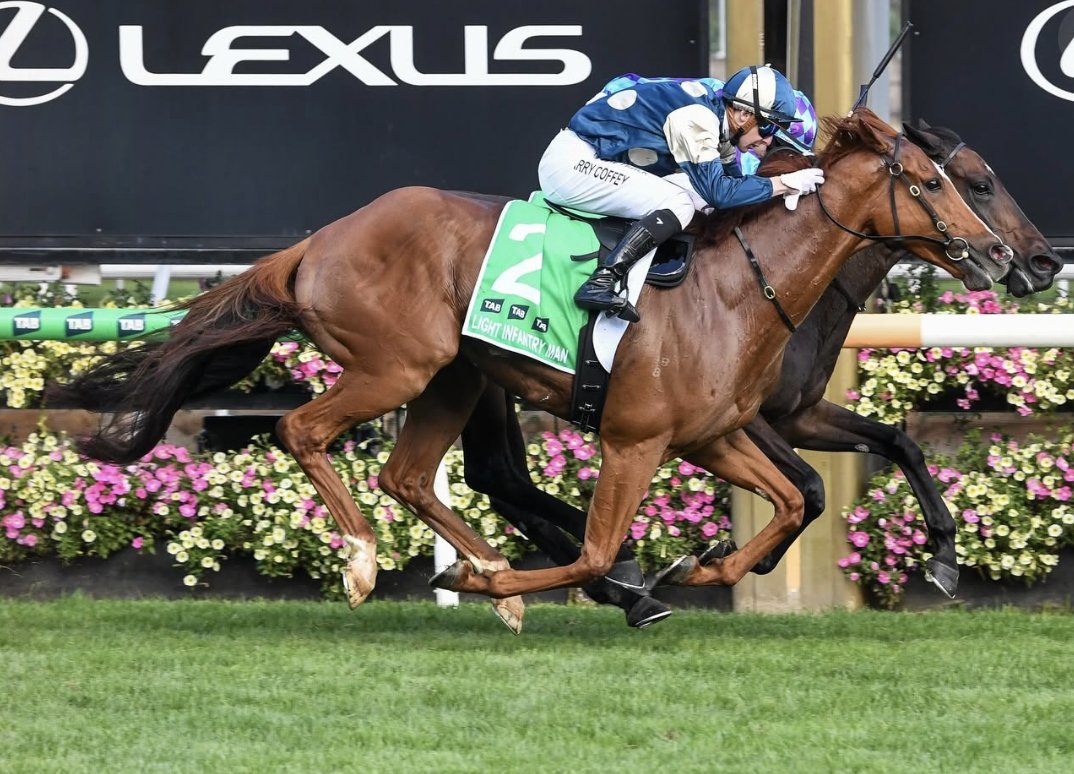
He won it. By a neck, from Joliestar — a horse with genuine Everest claims — with his own stablemate King’s Secret a nose away third. The Sydney Morning Herald put it best in its headline: Pride’s cranky old Mazu upstages Everest hopefuls in the $1m Shorts.
Joe Pride trains him. Rachel King rode him. A $1 million Group 2 over 1100 metres, taken off the horses who are supposed to be the future, by one who is very much the past.
And then the part nobody expected
Here is where it stops being a funny story about a grumpy horse and becomes something better. Pride was asked the obvious question — does this put him in The Everest? — and gave the least fashionable answer in Australian racing.
“To be fair to him, he’s had a few goes in Everests and it’s not really his race.” He would want a start only “if on the day it was wet.” And then the line: “a nice sixth or seventh doesn’t interest me a lot.”
Why that sentence is worth more than the win
The entire architecture of the spring is built on the assumption that everybody wants in. Twelve slots, $20 million, the biggest audience of the year. Trainers spend seasons manoeuvring for one.
Pride has just won a $1 million race with a horse who could plausibly attract a slot, and said out loud that a placing in the big one is worth less to him than a win somewhere that suits. That is not modesty. It is the same discipline any punter is supposed to have and almost nobody does: knowing the difference between a race you can be in and a race you can win.
Most of us back the horse because it is in The Everest. Joe Pride just declined The Everest because of the horse. One of those is a strategy.